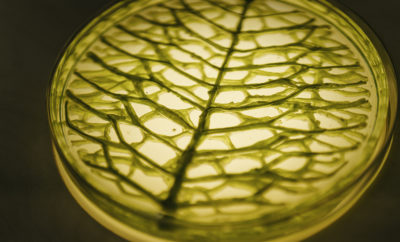
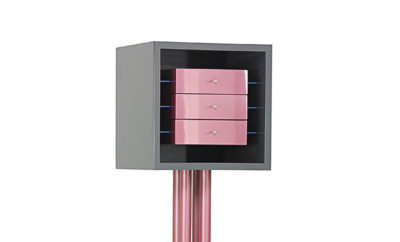
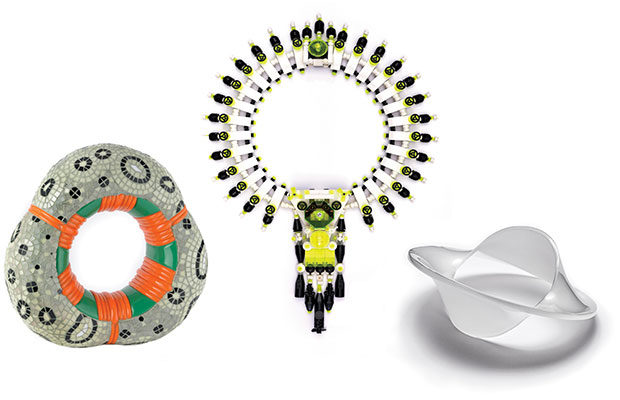
 OTTO KTINZLI / ARTISTS RIGHTS SOCIETY (ARS) NEW YORK / VG BILD-KUNST, BONN | © EMIKO OYE | © GIJS BAKKER / ARTISTS RIGHTS SOCIETY (ARS) NEW YORK, NY / BEELDRECHT, AMSTERDAM | ALL PIECES: LOS ANGELES COUNTY MUSEUM OF ART (LACMA), GIFT OF LOIS AND BOB BOARDMAN; ALL PHOTOS © MUSEUM ASSOCIATES / LACMA
Feature
Fantastic in Plastic: Jewelry from the Lois Boardman Collection
PLASTICS. With one word The Graduate helped define a generation, one that sneered at the perceived superficiality of American life and its “artificial” products. While the material was ubiquitous in industry by the time the film hit theaters in 1967, jewelers were just beginning to grapple with plastic’s potential. It was an inexpensive, malleable material, free of the value-laden connotations of precious metals and gemstones.
The Los Angeles County Museum of Art has received a remarkable gift of more than three hundred pieces of contemporary studio jewelry from South Pasadena collector Lois Boardman and her husband Bob, featuring work from the United States, Europe, Australia, New Zealand, and Japan. This fall LACMA will host the exhibition Beyond Bling: Jewelry from the Lois Boardman Collection, which will showcase the diversity of materials and forms studio jewelers have used over the last half century. Plastics are integral to many extraordinary works in the Boardman collection, and using examples from those holdings we can trace key moments and approaches to these manmade materials in studio jewelry. Over the last fifty years, plastics have gone from innovative industrial products to materials that permeate almost every aspect of modern life. This transformation has affected how jewelers approach these materials, ranging from an early and sustained enthusiasm for plastics’ creative potential to more recent critiques of their place in contemporary consumer culture.
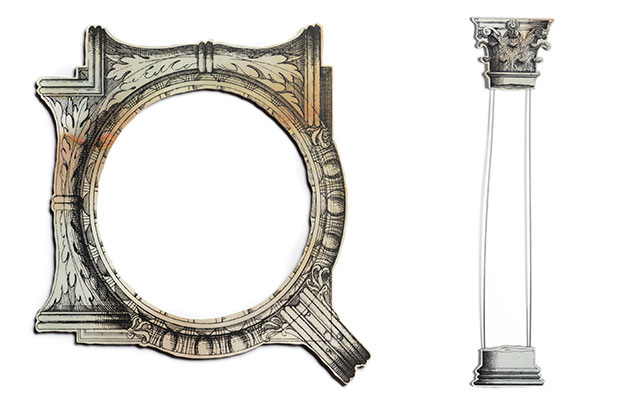
Capital bracelet and Capital brooch, 1983. Screen-printed Formica and screen-printed Formica and stainless steel; bracelet 4¼ inches square, brooch, 9½ by 17/8 inches. | © RUUDT PETERS / ARTISTS RIGHTS SOCIETY (ARS) NEW YORK / BEELDRECHT, AMSTERDAM; LOS ANGELES COUNTY MUSEUM OF ART (LACMA), GIFT OF LOIS AND BOB BOARDMAN; ALL PHOTOS © MUSEUM ASSOCIATES / LACMA
Rejecting the austerity of “Dutch Smooth,” which dominated the country’s jewelry scene by the mid-1970s, a new wave of jewelers in the Netherlands emerged in the early 1980s, seeking to create more personal and expressive work. Ruudt Peters has tackled issues of philosophy and religion with his highly ornamental pieces. While he uses a wide array of materials, Peters often returns to the plastics that were part of his artistic training in Amsterdam. For the 1983 Capital brooch and bracelet, he screen-printed architectural elements inspired by the drawings of sixteenth-century Italian architect Andrea Palladio onto Formica, a plastic laminate frequently used for countertops or floors in lieu of marble or other stone. Through his choice of materials and use of prints rather than three dimensional forms, Peters plays with the idea of artifice. When worn, the pieces allude to Renaissance principles of proportion and the relationship between architecture and the body.